Showing posts with label Comics. Show all posts

Wednesday, July 25, 2018

Inside that comic book grab bag part 3

So far I've discussed several comics from that $6 grab bag I bought at Ollie's Bargain Outlet, and I haven't found a lot of happiness yet. Let's see if things turn around today as I dip back into it.

Adolescent Radioactive Black Belt Hamsters #1 (1986): This comic takes me back to the heady days of black-and-white comics being published by anybody who could speak English. Remember the seemingly endless wave of Teenage Mutant Ninja Turtles parodies? Well, the wave DID end, and I never actually read any of those books...until now.

I got a kick out of this for historical purposes. The issue is as self-referential as it gets, and it IS funny, though it is certainly of its time (see the PLO/hijacking parody). I did laugh at the legal disclaimer on the inside cover, which asks, "Will this statement save us in court if we get sued?"


Sky Wolf (#1 of 3) (Eclipse, March 1988): Kind of a bummer to get a "1 of 3" in a grab bag. Chuck Dixon (script) and Tom Lyle (pencils) bring us this story of international intrigue and adventure set in 1954. It's well done, but...it's only the first part of the story.

I did enjoy the vintage Eclipse house stuff in the issue, like cat yronwoode's editorial asking readers to conduct research about their local comic shops. There are house ads for Scout, The Dreamery, and a Milton Caniff book, plus more.

This springs from the pages of Airboy, which I never read, so...I can't add much except to say I wouldn't have minded seeing the rest of this mini.


Medic #1 (Double Take, 2015): Part of an ambitious launch of a line of comics inspired by some kind of universe based on Night of the Living Dead, this one didn't make me yearn for any more. I found the art unappealing except for the striking painted cover, and I am sure the story of the ill-fated Double Take venture from ex-Marvel publisher Bill Jemas is more interesting than the product itself.


Kirby: Genesis! Silver Star #2 (Dynamite, 2011): It's competently done, but it's a second issue of a spinoff of a 1980s Jack Kirby effort I knew nothing about. I was a little lost here, but I imagine it's a good read in collected form.


Add caption


Don't worry, I am saving the best for last. The gab bag hasn't won me over yet, but I have some solid reading experiences coming up in the next installment!


Tuesday, July 24, 2018

Behind the Rankings: DC Universe

In this week's rankings, I give DC Universe the #10 slot despite it not existing. It's coming this fall, though, and it generated some chatter at last week's San Diego Comic Con. I'm not thrilled about the price point--7.99 a month, but to be fair it includes some kind of access to digital comic books--and the early glimpses of originals like Titans doesn't impress me, but as a longtime (if lapsed) DC Comics reader, I just want this to be cool.

A while back, I made some suggestions for classic TV shows that should stream on this new streaming video service. Well, we now know some of--hopefully not all--the content DC will give us at launch. It's more than I would have feared but not as much as I hoped.

Perhaps the big showcase effort as far as classic TV is concerned is the 1970s Wonder Woman series. If this is remastered and uncut, hey, I'm there for Lynda Carter in HD. In that earlier post, I wrote:

I already suggested Batman (1966) for Netflix and Wonder Woman (1977) for Amazon. Wouldn't it be fantastic if DC, which is reportedly "securing rights" to old shows and movies, is going to announce each will be on DCU instead? I may even shell out for this thing if it gets both of those.

I think Batman streaming in high-def would be a real game changer for a new service like this, and maybe it's still in the works (or maybe even--I can dream--a surprise announcement being held back for launch), but for now, hey, one out of two ain't bad.

The other shows I picked:
The Adventures of Superman: No sign of that here yet, which is a shame.
Lois and Clark: It's not being touted in the publicity for this service, but the released promo pics indicate the entire series will be on the service. Thumbs up, DC!
The Flash (1990): This is included as well!
Filmation cartoons: I don't see anything about these...yet. I still think it's a natural fit considering many of these
Justice League: Also included!

That's 3 out of 5 I wished for, plus, according to that promo pic, "9 seasons" of Super Friends. You can parse that show many different ways--The New Gods know Warner sure confused things with its endless DVD releases--but I think that means the entire run will be there.

All this plus Batman: The Animated Series and Superman: The Animated Series (though I read it may just be some and not all of the episodes) makes a decent package. Is it worth 8 bucks a month? Well, with the originals, it's worth a look-see, I think. However, at 8 bucks a month, I don't think I would have this an automatic purchase every 30 days. Now, the comic book component could blow me away, and with access to a huge back catalog of comics, I might see it a little differently.

Wednesday, July 4, 2018

Brooks on Books: "Slugfest: Inside the Epic 50-Year Battle Between Marvel and DC" by Reed Tucker

I love this book. It's just the right blend of taking the subject seriously and having fun with it, just the right combination of facts and opinion, just the right amount of reportage and gossip.

As a DC guy for all my comic book life, though--which is close to 100% of my total life--it pains me to read it. Oh, I'm not one of the hyperpartisan fans mentioned in the text who support one of the Big Two comic publishers at the expense of the other. I have always read both, and when I bought comics and stayed "current" in the hobby, I bought both. But my heart has always been with DC, and my favorite characters are the ones controlled by that company.

So it's tough reading so many anecdotes about Marvel surpassing DC in commercial and critical success, Marvel being perceived as the cooler and hipper outfit as DC time and again tries to imitate it and play catch-up. It hurts, I tells ya.

It's a lot of fun, though. Tucker, a former New York Post staffer and freelancer who is not in the industry, offers an evenhanded but lively account of the decades-long rivalry between DC and Marvel. The former company got a 20-plus-year head start, but when Stan Lee and Jack Kirby invigorated the field with Fantastic Four and other creations, the tides turned and the game was on.

At times it does seem like a game, with publishers, editors, and creators taking playful snipes at each other but still socializing and competing in friendly softball games. At other times, it feels more like a cold war, with personal animosity driving business and creative decisions (like DC and its executive Paul Levitz's anger at Marvel executive Joe Quesada's brash, insulting interview blocking efforts for a Batman/Daredevil team-up). Over the years, though, the two companies managed to cooperate on special projects, share talent, and work together on relevant issues. In Tucker's narrative, there is always at least an undercurrent of rivalry, though.

Tucker spoke with many comic book notables and also gathered info from sources like mainstream newspapers and fanzines and comic book magazines. His skillful integration of that research makes for a smooth read. The history of the medium has been told (and told well) before, but Tucker offers a unique slant on the saga. His focus on the relationship between the two largest publishers mean there is a lot here for people who have read other tomes. Sean Howe's excellent Marvel Comics: The Untold Story  is similarly compelling and gossip-flavored, but there is a lot new in here even if there is some overlap in the themes.

If Jim Shooter, former Marvel editor-in-chief, was a controversial figure in Howe's book, he may be topped by former Marvel president Bill Jemas in Tucker's. One of my favorite moments, even though I am a DC guy, is when the publishers meet for a Comics Code Authority conference and Jemas makes it a point to bring a bunch of guys he just hired away from DC just to stick it to the other side. DC has two reps there, Archie Comics has one. When DC squawked about the unnecessary entourage, "Jemas contended that the number of people from each company was in direct correlation to sales."

That's a great example of the kind of tidbit you get in Slugfest, but most of the time, the feud is friendlier. Tucker shows how the underlying tensions remain even as the specific dynamics often change. In the 1960s, it's the upstarts at Marvel against the staid, conservative DC. Both companies get new corporate overlords and flirt with financial disaster. DC finds licensing success and movie success with Superman while Marvel tries again and again to get some movies off the ground. Now, of course, Marvel Cinematic Universe releases are massive events while DC struggles to find consistent success despite its favorable results on the small screen.

And of course, the battle wages on in the comics itself despite a landscape that is much different than it was in the 1960s. After years of skirmishes in areas like price increases, page counts, variant covers, etc., the two publishers seem like intellectual property farms in an increasingly narrow market for readership. They are still around, though, and still competing not only against all of the other entertainment options out there, but against each other.

Tucker offers valuable perspective on the epic rivalry while wisely refraining from choosing sides. He references the sniping between fans of DC and Marvel but concentrates on the people actually working for the two companies. Slugfest shows that the giant adversaries have a symbiotic but contentious relationship and that their conflict has been an entertaining driver of change in the medium for years and will continue as such. Anyone who grew up on comics and took a side in the eternal DC or Marvel debate will love this, but so will those who always made room for both. Tucker's book is strong enough to bring everyone together--maybe even Paul Levitz and Joe Quesada.

Friday, June 29, 2018

Inside that comics grab bag part 2

I am breaking down in more detail the comics I got in a 10-issue grab bag at Ollie's Bargain Outlet. Part 1 is here, and the first closer look is here.

Last time out, I was disappointed to read two comics that left me hanging. I don't think the trend will change this time, but we shall see!

What If Inhumans Infnity Something or Other #1: This is a one-shot associated with a big Marvel Universe crossover EVENT of some kind. I would have loved to have scored an issue of the original series of What If?, but that was not to be. This is What If Black Bolt Betrayed Earth? Since it's an offshoot of a big epic, I am sure it would resonate more if I remembered/knew that event.


The thing I loved about the old What If? was that each scenario more or less culminated in half the characters dying a horrible death. It was a wonderful, morbid series that had all these abominable things happen to well-known characters. This new one is not so shocking or depressing, but it is kind of a bummer.

On one hand, I kind of enjoyed it because I never liked the Inhumans. I liked Black Bolt because he looked cool, but the rest of it annoyed me. Sometimes it was a fun little part of the Marvel U, but other times all their hoity-toity talk about being regal and so superior drove me up my decidedly unroyal walls. The Inhumans acted as if just because Black Bolt had a literal throne his inhuman poop didn't stink.


So it's kind of interesting to see what happens in this Imaginary Story (oops, that's the other company). Yet I just can't get fully invested. This book has that modern Marvel art style that I assume every other of their books has had for the last 15 years. The lettering annoys me. I just can't really get into it. And Uatu is nowhere to be found. It seems like a pointless cash grab rather than the good, old-fashioned gory Faces of  Death that the old What If? was. Thumbs down for this one overall, but as filler for a grab bag, I guess it doesn't offend me.

Tuesday, June 12, 2018

Classic Shows That Should Be Streaming: 5 for DC Universe

Wait, we don't even know exactly when the new DC Comics streaming service will be, so isn't this a bit early? Well, perhaps, but given the reports last week that DC is prepping its back catalog for this service, I am bumping this post up in my ongoing series of Classic Shows That Should Be Streaming.

We also know it is coming "late August" and that some kind of digital comic book/other branding component will be part of this. Several original series are in production now. I am focusing on the old shows, though. Here are 5 that I think DC Universe should carry right from the get-go:

NOTE: I already suggested Batman (1966) for Netflix and Wonder Woman (1977) for Amazon. Wouldn't it be fantastic if DC, which is reportedly "securing rights" to old shows and movies, is going to announce each will be on DCU instead? I may even shell out for this thing if it gets both of those.

1) The Adventures of Superman: From a modern perspective, the first season is great. The rest of the show, especially the later the show went on...not so much. It's Superman, though! It's an iconic TV classic that I think would linger in the public consciousness even without the sordid demise of star George Reeves.

The sad fact is, Warners has never really treated this series like a crown jewel. The DVD releases included some extras, but it didn't seem like there was a desire to invest a lot of money in restoration and supplemental material. A Blu-Ray release looks unlikely at this point. I want to see the new DCU platform step up and make the entire series available and make a big deal out of it. Warner Archive Instant streamed the series for a while, so this one is a definite possibility.

2) Lois & Clark: The New Adventures of Superman: Largely forgotten since it aired, and maybe its serialized nature doesn't lend itself to reruns. It certainly had its highs and lows. Yet it mattered for a while, and I watched it and would like to see it again. It's a part of the legacy of DC's flagship character, and considering it (apparently) has little prospects elsewhere, it should be a part of the new DCU service.

3) The Flash: This 1990s precursor to the current CW staple may have too few episodes (22) to draw huge $ in syndication or streaming, so why not throw the whole run on DC's own joint? Star John Wesley Shipp is a regular presence on the new program (co-star Amanda Pays appears as well), and I would like to see some more credit given to this underrated cult hit.

4) Filmation DC cartoons: I think it's a lock that these will be on DCU. Warner Archive Instant streamed the old Superman with the snazzy theme song, Aquaman, and The New Adventures of Batman (the 1977 series with Adam West and Burt Ward...and Batmite). Throw ALL these on the new streamer, DC, and also the Superboy, Teen Titans, and Atom shorts. I really want to see the late-1960s Batman cartoons, too. Why not? No one else is running this. Here is the chance to do something with them.

5) Justice League/Justice League Unlimited: A lot of people would argue Batman: The Animated Series (streaming...for now....on Amazon) is the crown jewel of the Timmverse of DC animated properties, but the JL cartoons were among my favorite TV shows, period, when they aired. They were on Netflix for years but are now in limbo even though many of the feature films of the modern DC animation area are on Hulu. The show is just too good to not be available anywhere. Its inclusion on DC Universe would give the service a solid fan favorite exclusive.

This is a decent start, right? Take these 5 and the live-action Batman and Wonder Woman series, and you really have something. While we're at it, the 1980s Superboy series is collecting dust, and it would be great to put all the endless variations of Super Friends in one convenient location for our streaming pleasure. Throw all this together, and even someone like me who already watches too much streaming video will have to consider signing up.

Friday, June 1, 2018

Inside that comic book grab bag Part 1

I recently shared the results of a $6 gamble I took at Ollie's, a purchase of 10 comics books in a "grab bag" package that revealed only two of the titles. Now that I am actually reading the issues, I want to update you and report on how the bag is turning out.

We are off to a bad start.

I'm most excited about the 1982 Superman comic, but I was most curious about The Twilight Zone, written by Superstar Fan Favorite J. Michael Straczynski (he still has that designation? Am I years behind?) and art-ed by Guiu Villanova (no relation to Villanova University). This book fell victim to my own expecations, and I wound up getting a little cranky about it.


So the fault is my own uninformed assumptions, right? No, of course not. It's the book itself.

I picked out the grab bag I did partly because I thought a Zone comic would be cool. I assumed it would be a one-in-done story. I mean, that's what the source material was! It got in and out of there in 25 minutes. Yes, it did a season of hour-long episodes, but I think most would agree that wasn't the Zone at its best; in fact, it's one of those rare series that isn't complete  on Netflix. Ted Sarandos or some big shot there looked at it and thought, "Nah, you can keep that fourth season. We're good with the others."

Yet Twilight Zone #4 (2014) from Dynamite is the end of a multi-part arc. I'm not even sure it is the end; the final pages indicate something else is going on, and a blurb says "Next Month: Episode Two, REWIND."


What's here is competent, and I got some of the gist of it, but I was quite disappointed. And while I didn't necessarily expect to see Rod Serling in the comic itself, his presence sure would have helped.


Plus, as I mentioned in my original post, 21 pages for 3.99? Boy, am I glad this is but one title in a grab bag.

Dead Letters #2 (Boom!, 2014) is also part of an ongoing arc, but that doesn't surprise me. Let's face it, I think we just have to assume any single comic book issue these days is part of some trade-paperback-ready arc. That is why I was hesitant about buying the grab bag and why I wouldn't have bothered had I not known that at least the older Supes book was there. It's also why I stopped buying comic books years ago.


I'm just not the target audience for Chris Visions' art style, and Christopher Sebela's story seems ambitious--a lot of metaphysical/afterlife/mythology stuff--but I just couldn't get into this. I will say that the story seems to spend a lot of time setting up ground rules for this universe, which is good for someone who missed #1, I presume, but leaves you thinking, man, they are sure spending a lot of time setting up ground rules for this universe. Dead Letters #2 is but one small part of what appears to be a dense narrative. So again, I don't think I really got my 60 cents' worth from it.

I tell you what does look cool, though: This Avengers (the TV show, that is) book that a house ad touts near the end. I wish that had been in this grab bag!


True believers, I have a feeling I am going to come back to this theme again as I continue reading the grab bag haul. I will try my best to avoid repeating myself too many times. I will try my best to avoid repeating myself too many times.

So far, I really hope that Superman comic turns out to be awesome.

Friday, May 25, 2018

What kind of comics do you get in a $6 grab bag at Ollie's? Let's find out

I made my first foray into Ollie's Bargain Outlet a few weeks ago. Ollie's is a confusing joint. It looks like Big Lots, it smells like Big Lots, but it isn't Big Lots. Or is it? Well, no, it's not. Actually it's pretty straightforward now that I think about it.

One of the items Ollie's carries is a grab bag of 10 comics for 6 bucks. You can see the front and back issues, but other than that it's a mystery unless you decide to be an ass and open the package. I figured, what they hey, it could be fun to see what's inside. The bags make a DC or a Marvel, and usually one of the older issues, visible in each package, but there is no guarantee of what else is in there. I got a mix of Bronze Age, Independent, Modern Age, DC, Marvel...a real grab bag, if you will. Here is the rundown:


1) Superman #372 (DC, 1982): For some reason, it amuses me that this one came bagged and boarded (the only one of the 10 with that distinction). This one takes me back to my childhood with the creative team of Cary Bates/Curt Swan. I had a ton of Superman comics at this time, but I don't think I ever had this one.
 
2) Kirby: Genesis Silver Star #2 (Dynamite, 2011): Other than the credit of "Art Direction and Story by Alex Ross" and the apparent Jack Kirby connection, this looks inessential.


3) Dead Letters #2 (Boom, 2014): I have no idea what this is about.  It looks gritty, and the art is...idiosyncratic. It won't be at the top of the pile, but I will keep an open mind.


4) What If? #1 Infinity Inhumans (Marvel, 2015): The one Marvel book in the bag. I am not a fan of the art, but I am glad this is a self-contained story (I think). Oh, how I wish it were one of the original What If? issues.


5) Sky Wolf #1 of 3 (Eclipse, 1988): Billed as an "Air Fighters Mini-Series," it has a cool enough cover. I laughed because as soon as I saw the publisher logo and title, I thought, well, must be a Chuck Dixon book.  It is!


6) Adolescent Radioactive Black Belt Hamsters #1 (Eclipse, 1986):
Nothing like a little black-and-white vintage Eclipse. I am actually amused to have this even though it looks amateurish. Isn't this one of the seminal Teenage Mutant Ninja Turtles ripoffs?


7) Medic #1 Flatline (Double Take, 2015): Co-written by Bill Jemas. It has a striking painted cover and good production values--maybe the best paper quality in the bag--but the interior art looks idiosync--no, awful. I'll just say that to me the art looks unappealing.


8) Time Twisters #1 (Quality, 1987): An anthology that reprints stories  from the British 2000 A.D. This issue features all Alan Moore stories. Artists include Alan Davis, Dave Gibbons, Paul Neary. I think this may be one of the more pleasant surprises of the grab bag.


9) Giant Size Red Sonja #2 (Dynamite, 2008): I am sorry to report that the first thing I thought when I saw this was, "Giant Size Thingies." This anthology has an interesting cast of writers, including Christos Gage and Roy Thomas; plus a story written and drawn by Frank Thorne that looks pretty cool.


10) The Twilight Zone #4 (Dynamite, 2014): The other visible title besides Superman, and it helped me choose this bag over the one with a cool vintage Marvel Team-Up because I was curious what a modern Zone comic would be like.  It's by J. Michael Strazynski and Guiu Vlanova (is that a pseudonym?).Unfortunately, this is 21 pages of story for the cover price of 3.99 and looks like a ripoff at 3.99. Perhaps I will get 60 cents of entertainment from it, though.


When I first opened this, I felt a little embarrassed that I impulse-bought it for 6 bucks. Even at 60 cents per issue, I was thinking I would be better off buying stuff from a 25-cent, 50-cent, or even a dollar bin somewhere. Yet it was a fun "lottery ticket" of sorts, and when I list all the comics like this,, I am satisfied even though I wouldn't have picked up any of these in a bin except for the Superman comic.
 

Wednesday, January 3, 2018

10 Things I Loved in 2018

Don't consider this a top 10, but consider it...a 10. Don't consider this a Bo Derek 10, but consider it...Ah, you get the idea. Here are 10 things I loved in 2017. I recommend you check these out, love them, and create your own list of 10 including these exact things at the end of 2018. Just please try to change the wording a bit.

*The Lego Batman Movie: I didn't see all of the superhero movies that came out this year, or hardly any of them, but you'll have a hard time convincing me any of them are better than Lego Batman. It's so good that I am willing to endure 10 more Will Arnett live-action sitcoms (the idea of them, not actually watching them).

*The Terrible Podcast: Minute for minute, kilobyte for kilobyte (OK, I don't know what I'm talking about), no sports podcast--maybe no podcast, period--gave me more joy in 2017 than this Pittsburgh Stillers show, "just a couple of Daves talking Steeler football." In season, they do 3 shows, almost always an hour apiece, and with absolutely no ads or ad reads. It may be the best bargain in 'Burgh sports (insert Mike Hilton comment). Even when my enthusiasm for football dims, I look forward to this podcast.

*The Honeymooners on Blu-Ray: One of my favorite presents last Christmas brought me all kinds of entertainment throughout the year and continues to do so. I remain both delighted it was so cheap on Amazon and also sort of offended that it was.

*Comic Book Fever: See my review here of George Khoury's delightful exploration of seemingly 50% of everything I loved as a kid.

*Eight Is Enough on Warner Archive Instant: This comfort food is the TV equivalent of eating an old sock. Wait, I think I screwed that up. WAI deserves criticism for, uh, not doing anything for months on end, but as long as it has all 5 seasons of EIE, I'm there.

*800 Words on Acorn TV: I signed up for Acorn to watch Doc Martin, but I stayed because of this charming, simple dramedy about an Aussie family that moves to New Zealand. Well, actually I didn't stay, but I will be back eventually. It's also a fun comfort-food kind of show.

*Burger with fried egg: I tried this for the first time this summer and loved it. The truffle fries didn't hurt, either. I had another one recently at a different location, and while I now acknowledge the legitimacy of egg on burger as a concept, it was really the specific location that made the meal so awesome. Plus there was undoubtedly some kind of fattening sauce, butter, and, what, two different kinds of cheese. Dag, I'm hungry now.

*MLB.TV: The Pirates looked awful at times, but this was the first season I had MLB.TV and access to all of the games (well, almost all; let's not get into the inane blackout rules right now) for a whole season, and it was splendid, even if I get sick of seeing the same commercials over and over and over again.

*Jim and Andy: The Great Beyond: I said after I watched this that either Jim Carrey is one messed-up dude or he is a fantastic and pretentious BS artist. Probably a little of both. This documentary showed up late in the year on Netflix and mesmerized me with its combination of Hollywood history, Hollywood ego, Hollywood nuttiness, Andy Kaufman, pro wrestling, and, yes, maybe even a little bit of the human condition.

*SeanMC's YouTube Channel: I love, love, love, old TV promos--I launched a recurring feature devoted to sharing them on the blog this year--and Sean Mc is a reliable uploader of great vintage 1970s/1980s content, much of it absurd hype jobs voiced by legends like Danny Dark, Ernie Anderson, and Casey Kasem. Opening YT and seeing Sean posted a batch of fresh vids is like--uh, I'm out of strained similies, but it's awesome.

Tuesday, August 29, 2017

Brooks on Books: Bloom County: Episode XI A New Hope

Back in the 1980s, I loved the Bloom County newspaper comic strip by Berke Breathed. I like to think of myself as being a fairly attentive youth, but even if I hadn't known who the likes of Jeanne Kirkpatrick were, I would have found them out so I could understand the political references. Those strips are of their time, for sure, but they hold up better than, say, Outland or the Opus strip that Breathed did in later years.

Well, somehow, I forgot all about the Bloom County revival Breathed started on Facebook (well, maybe I ignored it because it was on Facebook) until I saw this collection at the local liberry. Much to my delight, this new incarnation FEELS like Bloom County. It makes some tweaks and adjustments to the characters and the setting, but it doesn't feel forced like earlier attempts to bring it all back did.

It's tempting to make a parallel between the current political climate and events of the 1980s, but I think it's more than that. Breathed alludes to being more comfortable revisiting this world now in his intro, and I think it shows. The result is a lively, funny, relevant collection that recaptures the spirit of the original strip but places it firmly in modern times.

Opus is front and center, but so is Binkley and his anxiety closet.  Steve Dallas is more or less the same, as is Bill the Cat. Milo and Oliver return along with Cutter John. It's not just  nostalgia that makes the book so enjoyable, though.  These comics are funny.

The one thing I dislike about this book is the oddly self-congratulatory tone of it. I am sure Breathed means well by touting his friendship with Harper Lee as one of the reasons he brought back the strip, but it feels kind of weird. Also, many pages feature comments from Facebook originally posted by Bloom County fans.  I think maybe a section in the back of the book would have sufficed, but seeing these with some of the actual comics gives an unfortunate "patting ourselves on the back vibe."

I do think Breathed deserves a pat on the back, though, and this collection really surprises me. I thought Bloom was a relic of the 1980s, if a fondly remembered one, and I hadn't been eager to see a revival. Yet it's here, and it belongs.

Wednesday, August 23, 2017

Brooks on Books: Comic Book Fever by George Khoury

Is it hyperbole to claim this is the greatest book ever published?

Perhaps it is overpraise, but this is a fun, fun book. It's another knockout package from the fine folks at TwoMorrows Publishing, a company dedicated to making  periodicals and books about pop culture, with an emphasis on comic books. In Comic Book Fever, George Khoury examines an era right in my wheelhouse. The subtitle is: "A Celebration of Comics 1976 to 1986."

This 239-page softcover celebration consists of  scores of short, punchy chapters focusing on different topics or individuals. A section might look at a specific comic title like Marvel Team-Up, an iconic creator like Neal Adams, or a memorable part of culture like the ubiquitous Hostess Fruit Pie ads. Khoury conducts interviews with connected individuals and tells the stories of all of these cool things that people like me loved so much growing up.

The writing is compelling if a bit breathless at times. Khoury comes at this with pure nostalgic love for just about everything in here, and he ends many chapters with declarations of how much better our lives were due to the presence of, say, DC's Dollar Comics line. You know what, though? He's not wrong.

It's all supplemented with typical eye-catching TwoMorrows design. Vintage comic pages, ads, original art, and photographs fill Comic Book Fever. The pages pop with color, and frequent sidebars flesh out the chapters and give the sense that the whole thing is packed and a good value.

I admit I questioned some of the space allocations. For example. Love and Rockets and Elfquest get a lot more pages than many of the one- and two-pagers that interested me more. However, Khoury has a great eye for interesting facets of comic culture. I loved reading about the origins of the Marvel series about the Human Fly or the Spalding ads. It's great to learn about Dynamite magazine, ICEE superhero cups, and so much more.

Ever wonder what the deal was with those ads for the original Heroes World stores with all that sweet merchandise? Or the "Sell GRIT" ads? I did, and Comic Book Fever explains all.

There is also some hardcore comic book history here, like the beginnings of The New Teen Titans, Neal Adams' efforts for creator rights, and even indies like Nexus. The variety of material covered is impressive. For example, you read about famous icons like Alan Moore and John Byrne (conspicuous by his absence since so many other living "Icons" apparently spoke with Khoury) but also important but less famous figures like Jose Garcia-Lopez.

In short, Comic Book Fever does justice to the awesome era it explores, and if you grew up loving any of this stuff, you will love this book. I give it my strongest recommendation.

(NOTE: This post was edited slightly after the comment below by the author, who graciously noted that Alan Moore did indeed participate in an interview for the book)

Wednesday, June 28, 2017

Brooks on Books: Tetris: The Games People Play by Box Brown

I am no "video game guy," but I have loved playing Tetris for years. I had no idea reading about it would be so much fun or that the addictive puzzle game had such a fascinating backstory. Box Brown, who earlier produced an outstanding biography of Andre the Giant, delivers another fantastic graphic novel with this enthralling story of the game.

Brown starts with a brief illustrated history of games in general--how they started, why they appeal to people, and so forth. It's a fine beginning that provides context and sets the stage for the tangled account of Tetris itself.

The deceptively simple-looking game of the falling puzzle pieces was created by Soviet software developers. How it made its way to the USA and around the world is an incredible story you have to read to believe. It involves bureaucracy, geopolitics, foreign intrigue, corporate chicanery, and so much more.

I really don't want to give anything away, but just know that Brown's skillful rendering of the story draws you right in and doesn't let go. He manages to make the human "characters" stand out, and the real-life twists and turns of this saga have a big impact due to the quality of the storytelling.

I figured that reading this would make me want to go play some more Tetris again. What I didn't know was just how much I would love this book. I highly recommend Brown's brilliant adaptation of a surprisingly complex real-life story of business, one told against a backdrop of the timeless appeal of playing games.

Tuesday, June 6, 2017

Journey Into DVD: Charle Brown and Friends

(Editor's Note: 'Mooners Monday will return next week. On Monday.)

This is a single-disc repackaging of material from the Peanuts: 1970s Collection DVD set. It consists of 3 half-hour animated specials originally aired on CBS in the late 1970s along with a featurette.

It's great to see the holiday-themed Peanuts specials every year, but there were tons of other ones on TV back in the day. It's a shame they don't get much play, and it's also a shame that Warner Brothers has released these in confusing subpackages rather than going with affordable comprehensive collections, BUT if you  look hard enough, you can find the old stuff and enjoy it today on DVD.

This particular disc reminds you that the Peanuts specials were weird. We sort of chuckle at the quirks of the holiday ones because we've seen them over and over again, but when you revisit some of these lesser-known efforts, you scratch your head sometimes.

The first special is What a Nightmare, Charlie Brown! There may not be too many children's animated specials prominently featuring the word "nightmare," but does it really surprise you that Peanuts would give you one of them?

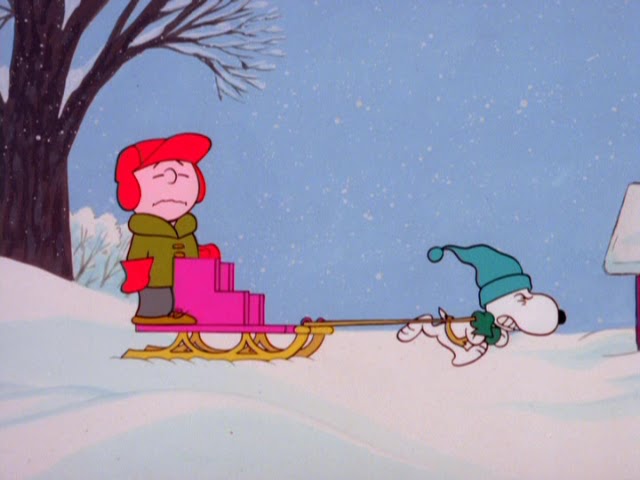
This is a bizarre half-hour focused on an odd dream Snoopy has. It starts when Charlie Brown, apparently in one of those moods, decides he wants Snoopy to guide him around like a sled dog. When his pet isn't up to the intense  physical exertion needed to do that, Chuck berates him and says he's too civilized, etc., etc.

Snoopy often comes off as aloof and not all  that likable in the specials, but here Charlie is a real jerk, and it's no wonder his poor dog has a nightmare about actually becoming a sled dog. 


The day Charlie went from proletariat to bourgeoise


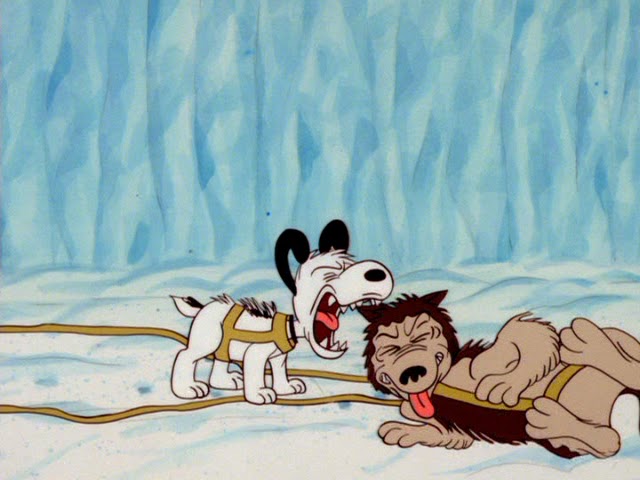
Snoop has all kinds of adventures, including working in, performing in, and playing poker in a saloon, before he "goes savage"  to become the lead dog in a pack. If you ever wanted to see Snoopy give menacing growls, bare his teeth, and get into a fierce struggle with a "realistic"-looking dog, here's your chance!


I think *I'm* having nightmares after seeing these images


The other two specials are more conventional. It's Your First Kiss, Charlie Brown spotlights a football game, and it's refreshing to see a team sport besides baseball. It may be a mistake watching it right after Nightmare, though; after seeing Charlie act like such a tool in that one, I was actually rooting for Lucy to pull the football away from him so he would fall on his duff.

Oh, and how old are these kids? First Kiss delves into the anxiety caused by boys and girls exchanging a smooch, but to do so, it sets up big football games, homecoming courts, and all the things you expect to see from a high school.  Actually, even many high school probably don't have the budgets to do all the stuff Charlie's school does in this one.


You don't see these kinds of parades on Thanksgiving, these days


You're the Greatest, Charlie Brown shows Chuck entering the Junior Olympics, specifically the decathlon, and screwing things up in classic Charlie fashion. Along the way, we see the Masked Marvel, a surprising bit of business from Marcie, and even a Bruce Jenner reference.  My favorite line is Peppermint Patty, trying to encourage her pal, calling Charlie "Chucko." His puzzled "Chucko?" response is classic.

Why, Marcie!


Added value comes in the form of the 18-minute featurette You're Groovy, Charlie Brown: A Look at Peanuts in the 70's." No, this is not footage of the Peanuts gang gettin' down to the sweet sounds of fuzz guitar. It's more a general overview of the strip, the production of the specials, and especially creator Charles M. Schulz. It's a nice look at Peanuts, though, and a welcome bonus on the DVD.

These aren't on the level of the perennial holiday favorites we've come to know and love, but they represent a significant portion of the Peanuts legacy and are part of TV history as well. These specials are fun, if a little out there at times, and deserve wider exposure.

Friday, June 2, 2017

Brooks on Books: Hark, a Vagrant by Kate Beaton

This book is awesome, Kate Beaton is awesome, and I only wish there were more collections from her available. I see she has done a children's book and is working on a graphic novel, and I'm sure they are/will be great, but I would love to see more of this stuff.

Hark consists of an assortments of original cartoons Beaton has done, many with a historical/literary bent. I have to say that just the fact that there are comics like this is enough to amuse me, but Beaton's askew sensibility makes the source material even funnier. Also, it's great that she pulls so many random references out of her hat. Well, I say random, but she is not just leafing through books and pointing her fingers at names. She has a history degree, worked in a museum, and is an unabashed lover of what she is covering.

Also, Beaton is Canadian, so prepare yourself for some obscure Canadian references. It's a nice touch that the strips are annotated. Many feature "artist commentary" notes explaining her thinking, what strikes her as interesting about the topic, or sometimes just who the subjects are.

Here's another nice touch: There is an index! It's just a cool little bonus for a work that blends fiction and nonfiction.

A lot of the humor centers on putting modern attitudes in older situations, but it never gets old in this book. She includes a couple of Hamlet-themed comics late in the collection, and "the ghost" arrives and tells his son, "Obviously I died of poison." A shocked Hamlet says he didn't know, so the king says, "Was there no autopsy? What did everyone think I died of?" Hamlet: "Uh, this is still the middle ages or something. They just thought you died from being alive."

I am totally not doing it justice. Something about Beaton's style, the look of the drawings, and the overall attitude makes all of this hilarious, and it gets better if you just throw yourself into it. I could write out more of the strips, but just go to her site and see some samples. I see she has a similar collection, and I need to get my hands on that one because Hark is 166 pages of fun, off-kilter send-ups of  mostly "scholarly" topics.

Wednesday, May 10, 2017

Brooks on Books: Green Lantern: A Celebration of 75 Years

This book is PURTY. Is it worth $40 MSRP (significantly less at Amazon)? Well, it's PURTY. It's a sturdy hardcover with 400  pages of DC Comics Green Lantern stories from all throughout the hero's career. Actually, it's HEROES' CAREERS, but more on that in a minute. I got this book from my friendly neighborhood liberry and therefore paid $0 RPP (Rick's Preferred Price) and found it an enjoyable read well worth the investment.

Believe it or not, I'm walking on air--no, that's a different costumed hero. Believe it or not, there are many incarnations of Green Lantern besides Ryan Reynolds, and this book gets the big ones. In fact, there is a whole CORPS of GLs, some with fish heads, some who are whole planets, and some who just look totally precious. This volume focuses on the Earth Green Lanterns, though--namely Alan Scott of Earth-2 (the first), Hal Jordan of Earth-1 (the most iconic), Guy Gardner (the most jerk-ish), John Stewart (the most black-ish), and Kyle Rayner (the most I-wasn't-really-reading-comics-then-ish).

There is a wide assortment of eras, stories, and styles in here. You get the origin stories and first appearances, some memorable one-shots, and a few stories that are in the middle of the now-standard multi-issue arcs. Creators like John Broome, Geoff Johns, and Gil Kane are well represented, and you get a sample of the famous "socially relevant" era that teamed GL with buddy Green Arrow for some 1970s-style consciousness...man! I don't know enough GL history to argue about the lack of particular stories, but I do question the inclusion of Geffen and Maguire's Justice League #1 only because it's a team book and a solo Gardner story could have taken its place.

The collection is heavy on first appearances, and I wonder if maybe someone should have just focused on memorable stories, period, but I don't have any true complaints considering this isn't titled Green Lantern: The Greatest Stories Ever. I suppose diehard Lantern fans will have plenty of suggestions and may have seen all of these stories already. But do they own them all in one nifty (and purty) hardcover package? If not, this might be the ticket even for the serious collector. For the casual fan, if the price doesn't intimidate you, or if you aren't a cheapskate like me willing to once again sponge off the library, this is an attractive addition to your own bookshelf, loaded with fun stories.

Wednesday, January 11, 2017

Batman 66 retro action figures--here's who I want to see

The explosion of merchandising of the 1966 Batman TV series is leading to some of the ancillary characters getting their due. I just discovered the ongoing line of Mego-style figures made by Figures Toy Company now includes the likes of:


There are also King Tut, Barbara Gordon, and more! I had no idea these existed (or perhaps I heard about them, saw the decidedly-unretro price, and forgot about them), and I think it's great the secondary villains are getting some merch. Maybe someday we can get a Chad and Jeremy set, a Sammy Davis Jr. peeking through the window figure, and maybe even a line of villain molls (R.I.P. Francine York, the Bookworm's Lydia).

In the meantime, I hope to see these guys in the next set:


I would strongly consider buying those, even at 25 bucks a pop. I would take a long, hard look at these were they to be manufactured:


Monday, December 5, 2016

Brooks on Books: The League of Regrettable Superheroes by Jon Morris

This is an outstanding book, one suitable for "pick up and read a bit at a time" enjoyment but one so entertaining you  might just want to tear right through it. Author Jon Morris runs a blog, Gone and Forgotten, that also covers weird comic book stuff, and I have added it to my bookmarks. The League is a pleasure from start to finish.

The format is simple: Morris divides comic book history into several eras, then assembles a list of "D-listers and also-rans" from each period and devotes a few pages (most entries are a page of text and a page of illustration, though some feature additional scans from the original comics) to explaining each one. Some of the characters either look goofy enough or have strange enough backgrounds and skills to be inherently amusing, so Morris' deft writing strikes just the right tone: bemused and appreciative of how crazy some of this material is, but not overwhelming it with forced humor.

Some of the wittiest comments come in the sidebars on each entry. For each regrettable hero, Morris provides a "Created by" credit and a "Debuted in" note with the first appearance of the character. Then he adds a miscellaneous vategory that provides an opportunity for a wise-ass remark. Example: In the chapter for Pat Parker, War Nurse, the sidebar has "Not to be confused with: Bob barker, game show host; Ma Barker, gangster."

This is a book you need to see to appreciate, so I won't waste time trying to verbalize the appeal, but there is a wide variety represented here. There are a few from the mind of cult Golden Age creator Fletcher Hanks as well as Marvel and DC products like Brother Voodoo and the Legion of Super Pets.

Here are some of my favorites: I'd love to read more exploits of DC's The New Guardians. Morris closes their entry with: The team's adversaries were equally ill-conceived. The roster included the Hemoglobin (a vampire with AIDS) and Snowflame (a super villain powered by cocaine).

1939's Bozo the Iron Man looks like a riot. Dr. Hormone and The Eye (who is an actual floating eye) are intriguing. How about Kangaroo Man, who is actually the sidekick to a scuffling kangaroo? My favorite entries are the obscure Golden Age heroes just because I have never heard of many of them, but it's a lot of fun reading about later efforts. I got a nice rush of nostalgia learning the story behind the AAU Shuperstar I saw in so many full-page ads back in the day.

It's a compact hardcover that feels substantial enough. It does leave you wanting more, but that's in the sense that it encourages you to seek out these goofy superheroes. Fortunately, much of this material is public domain and/or unclaimed and therefore findable online.

Wednesday, November 16, 2016

My Favorite Batmans (or should it be my favorite Batmen)?

Years ago, as I have explained before, I went through a brief phase in which I was embarrassed by the attention the 1966 Adam West Batman got and how that vision of the character crowded out all others in the eyes of the general public. Eventually, it hit me: So what?

There are many different versions of Batman, and I enjoy just about all of them! I was Batman for Halloween last month--sort of--and while my costuming was more reminiscent of Licensing Batman (McDonald's mask) plus 1966 Batman (t-shirt) plus Zorro (cape--hey, it worked in a pinch), my characterization was mostly the Adam West persona. Why? Well, it was more fun, people responded to it, and it's kind of a pain to talk like Christian Bale all day.

What, then, are my favorite versions of Batman? Here is my ranking. If I leave any off, it's probably because they don't stand enough out to me or I just don't enough about them. For example, I don't read New 52 Batman, so there is no current comics Batman here. I revisit this ranking every few years, so I do reserve the right to change my mind:

1) 1970s/1980s Comic Book Batman: I grew up reading the adventures of a Batman who was cool, with  it, dark when he needed to be, but basically a pretty good dude. Oh, he struggled with the sociopathic tendencies instilled by seeing his parents murdered in front of his eyes as a child...but they didn't define him.

I generally think of this Batman--MY comic book  Batman--as the Jim Aparo version. Nothing against Neal Adams Batman, but I loved Aparo's rendering, and Brave and the Bold was one of my favorite comic books (Bats AND another superhero each issue!).

2) Licensing Batman: Very similar to 1970s/1980s Comic Book Batman in my mind because Batman was everywhere when I was growing up, and that Batman looked very much like my comic version. I still find this one everywhere, on t-shirts, magnets, and even on stuff like cups. In fact, I am still bummed that I burned the bottom off my kick-ass tall Licensing Batman plastic cup I bought at Wal-mart a few years ago.

3) DC Animated Universe Batman: The Paul Dini version, more or less, right? This is like the version we wanted to see on screen. He's maybe a little darker than the one I grew up in, but it works. Voice actor Kevin Conroy's characterization over the years has been an outstanding asset. In short, this Batman rules.

4) 1966 Adam West Batman: But so does this one! Yes, he's silly, but you know what? He's also morally sound and dedicated to the cause of justice--a perfect role model. If this were the ONLY Batman around, we might have a beef, but why fret over a funny Bats?

5) Super Friends and other 1970s/1980s Animated Batman: Pretty bland, truth be told, but as a kid, that only made it easier for me to project my vision of Batman on him. Even the Filmation incarnation voiced by Adam West fit right in to this world. Slightly less charismatic than 1) and 2)

6) Brave and the Bold Animated Series Batman: Deidrich Bader surprised me with this one. The only reason it's not higher is the show's relative lack of broader impact and longevity.

7) 1950s/1960s Comic Book Batman: Just like the era he represents: Stolid, blocky, prone to bizarre fantasies involving monsters and space aliens.  Uh...I think I was going for something there that didn't quite come together.

8) Post-Frank Miller's Dark Knight (sometimes kind of a jerk) Comic Book Batman: I haven't read enough Batman comics over the last 10 years to make a judgment, and even in the 1990s on, my comic reading was spotty, but I am combining those Batmans with the post-Crisis one who did stuff like punch out Guy Gardner in Justice League. He wasn't always a total butthead, but he could be kind of a pill, especially as the years went on.

9) Golden Age Batman: Sure, he looks crude by modern standards, but we have to show love for this primitive Caped Crusader. He was offing hoods long before it was trendy.

I have an affinity for the comic books, and the movie guys just don't compare. Hence their placement at the bottom of my list:

10) Christian Bale Batman: The best movie Batman, IMO, though the voice thing still gets to me sometimes.

11) Michael Keaton Batman: He had the advantage of low expectations but did a tremendous job all things considered. I think he could go up on my list next time I see the Tim Burton films.

12) Dark Knight Batman: Frank Miller's version of the character set a template for years of stories to come, and the original miniseries is still a fascinating product of its time. However, it just doesn't "feel" like Batman to me...

13) George Clooney Batman: ...but at least it's not the Clooney Batman. I don't necessarily think Clooney is terrible, but, jeez, would you want to see it again?

14) Old Movie Serials Batman: Often laughable, but they tried. I can't for the life of me remember the difference between Lewis Wilson (the first serial) and Robert Lowery (from the second), and I can't say that I want to expend a whole  lot of effort to do so.

(Note: If it's not on this list, I didn't see it and/or it didn't make enough of an impression. I haven't yet seen Ben Affleck Batman, for example, and something like Darwyn Cooke's New Frontier Batman might have placed had he appeared more often)

Wednesday, September 14, 2016

Brooks on Books: Amazing Spider-Man Newspaper Strips Volume 2, 1979-1981

Talk about a pleasant surprise at the liberry! It was a thrill to even see "Amazing Spider-Man Newspaper Strips" on the shelf, and reading it was even more pleasurable than I expected. The comic strip is better than I remembered, and IDW does a tremendous job of packaging it.

Stan Lee writes and John Romita Sr. draws these Spidey adventures, though towards the end of the volume, Lee's brother Larry Lieber assumes art duties. An excellent preface by IDW/Library of American Comics editor Bruce Canwell explains that Romita left the strip due to frustrations with of the limitations of the format, especially the small panels. Lieber does a creditable job in the small sample here, but Romita's stuff is incredible. The main characters look great, and you wouldn't sense Romita's disappointment with a limited canvas from looking at his work. You have to enjoy little touches he provides such as seemingly throwing a gorgeous woman into the panel whenever possible. If Peter is riding the subway, you can be sure some babe will be sitting nearby...just because.

Stan Lee deserves equal credit for making this such an entertaining book. His dialogue is filled with the repartee and punchlines you'd expect and only occasionally feels awkward (In one scene, Aunt May thinks to herself after an exchange with a deceptively chirpy Mary Jane, "Despite her banter..." May casually thinking the word "banter" seems a bit much in that context).  Best of all, though, Lee's plotting excels. Devouring entire storylines in a single setting thanks to this collected format may give a skewed impression, but the pacing of the strip is outstanding. The stories themselves are compelling, with a mixture of familiar villains and interesting situations.

In this run, Spidey tangles with a vengeful Kingpin, opposes a charismatic cult leader, and faces off with the Prowler. He also considers marriage (not to Mary Jane) and experiences a webful of angst over revealing his secret identity to his girlfriend. he has money troubles, Aunt May troubles, and, yep, relationship troubles, just like you would expect your favorite wall crawler to endure.

I think my favorite storyline is the one in which Kraven makes public accusations that Spider-Man is a space alien and challenges him to appear on television to prove otherwise.  On the flip side, at one point Lee has Peter give up being Spidey--didn't that happen like every year? The real head scratcher is the last storyline in this collection, which has Peter resorting to crime to raise money. Lee tries to justify that one, but it does not ring true in any way, shape, or form and is the one real misstep in this volume.

One of the joys of the strip is the frequency of celebrity cameos--usually not named, but identifiable thanks to Romita's fine renderings. Sometimes you only see a notable for a panel or maybe a strip or two, as with Richard Nixon's appearance. However, the likes of Mike Wallace and Tom Snyder have key roles in the storylines.

Sometimes the references crack me up, like when Peter calls his girlfriend Carole and suggests they listen to the new Bee Gees album he just acquired. Mary Jane Watson, who is all sass in this volume, is assisting Kraven in his showbiz act and tells him she wants to get home in time to watch "Laverne and Shirley."

IDW reproduces the strips in glorious black and white and color (the Sundays), and rather than pick arbitrary dates, it bases the assortment included on storylines so we're not jumping in the middle or left hanging. Volume 2 takes us from January 1979 into 1981.

I haven't had more fun reading Spider-Man nor comic strips in general in a long time. Here's hoping IDW continues this series, and here's hoping cheapo Rick can get copies of the books from the library. I know I'm anxious to check out Volume 1 and Volume 3 now.

Wednesday, August 24, 2016

Fall Book Preview (that is, a list of upcoming books that I want to read)

Nothing against literary fiction, mind you, but I'm focusing on the books I really want to buy this fall.
Here, in no particular order, are books I might actually read and would love to get this season:

1) American Heiress by Jeffrey Toobin: An account of the Patty Hearst case, loaded with social context, no doubt.

2) Powerhouse by James Andrew Miller: The guy behind the oral histories of ESPN and "SNL" (what exactly did credited co-author Tom Shales do on those books, anyway? Nobody ever seems to talk with HIM about them) returns to tell the story of Creative Artists Agency.

3) Monsters in the Movies by John Landis: OK, the guy may be liable for a few movie set deaths here and there, but he knows his monsters! This is actually a paperback reissue of a book that came out 5 years ago. I confess I totally missed the original.

4) Altamont: The Rolling Stones, the Hell's Angels, and the Inside Story of Rock's Darkest Day by Joel Selvin: Title says it all.

(Note: Books 1-4 are all out now)

5) Four of the Three Musketeers: The Marx Brothers on Stage by Robert Bader: I think we can count on this Marx expert to deliver a fantastic read. (October)

6) That's Me, Groucho: the Solo Career of Groucho Marx by Matthew Coniam: Sounds great, but it's from McFarland, so unfortunately, it's 40 bucks MSRP for 188 pages. (September)

7) The General vs. the President: MacArthur and Truman at the Brink of Nuclear War by H.W. Brands: I enjoy Brands' works of popular history, and this should be a good read. (October)

8) Born to Run by Bruce Springsteen: I'm not a hardcore fan of the Boss, but I'm curious to see how this book turns out. (September)

9) Good Vibrations: My Life as a Beach Boy by Mike Love and James S. Hirsch: Yes, Brian Wilson has a memoir coming out, too, but I have to admit I'd much rather this one even if I won't believe all of it. (September)

10) Disco Demolition: The Night Disco Died by Steve Dahl and Dave Hoekstra: Tells the story of the infamous disaster known as Disco Demolition Night at Comiskey Park in 1979, an event that got out of control and actually led to the cancellation of the second game of a doubleheader. What a great idea for a book! (August 30)

11) Based on a True Story: A Memoir by Norm McDonald: How could this not at least merit a look?
(September 20)

12) The Best of Shoe by Jeff MacNelly: On one level, a hardcover collection almost seems inappropriate for this strip, but since nobody's making pocket-size paperback reprints anymore, it'll have to do. (October)

13) Super Weird Heroes (Various) Giant Yoe Books anthology of oddball Golden Age comic book stories.

14) TV: The Book: Two Experts Pick the Greatest American Shows of All Time by Alan Sepinwall and Matt Zoller Seitz: That title is a lot more pretentious than these guys' actual writing. Two perceptive and entertaining critics use this gimmick to survey all of TV history. I expect an addictive read.(September)

15) A Thousand Cuts: The Bizarre Underground World of Collectors and Dealers Who Saved the Movies by Dennis Bartok and Jeff Joseph: This sounds fabulous: An exploration of film collecting and a history of the FBI's efforts to harass the collecting community in the 1970s. (August 25)

Wednesday, August 17, 2016

Brooks on Books: Suicide Squad: Trial by Fire

What a treat it was to see this DC Comics trade paperback at my local liberry. At a recent visit to a certain major chain bookseller (OK, Barnes and Noble), there was an ample table devoted to tie-ins with the current "Suicide Squad" film. However, it was a whole lot of merch, a ton of Harley Quinn, and "New 52" trades. There was nothing about any pre-Harley Quinn version (Yes, such a thing exists!), let alone the Silver Age incarnation--this despite a big, shiny new book collecting the earliest stories in a suitably expensive format.

So I was glad to snag "Trial by Fire," which is one of those non-fancy affordable collected editions, a softcover compiling the John Ostrander revival of the team beginning in 1987. It's a fun reminder of why I loved comic books back in the day, and it's a particular delight for me because I never read THAT comic (this collection contains Suicide Squad #1-#8, which establishes Ostrander's vision of the team, plus an issue of Secret Origins detailing the backstory of the group). I give it a strong recommendation, but I also give the caveat that I have no idea how/whether/if this is at all relevant to the movie.

The Suicide Squad is a group of villains recruited by Amanda Waller and led by Rick Flag with the purpose of performing covert ops for the government. They are considered expendable and thus prime candidates for dangerous missions. This set-up lets Ostrander introduce some political ideas, some meditations on morality, and, yes, some of that sweet, sweet SOCIAL RELEVANCE we all love in our old comics.

This book wins me over from the get-go with the "Secret Origins" issue setting up the modern (well, in the 1980s) version of the Squad. As Amanda Waller makes her case to the unnamed President (who is clearly Ronald Reagan, and that's hilarious enough right there; I love seeing real people in comics), she recounts the case files of the older team.

My favorite line is when Waller, relating her own up-from-bootstraps story, tells Ronnie, "Of course back then we had some social programs to fall back on. You DO remember social programs, don't you, Mr. President?" What did I tell ya? SOCIAL RELEVANCE, baby! Reagan's gentle response is hilarious: "Now, now, Miss Waller..."   Incidentally, Reagan is not portrayed as a buffoon, though he does lament the fact that since the Squad was covert, it couldn't have been a movie, and, oh, there might have been a great part in there...

After you get into the actual run of "Suicide Squad," the thing that jumps out is the non-decompressed storytelling. Everything moves! It's almost to a fault--when one moral dilemma causes friction with Waller, it's eventually resolved when she basically gives a quick "My bad," and apologizes at the end of an issue. It's refreshing in a sense, but it's a bit rushed; nevertheless, I'll take this fast-paced stories even if some things go by quickly.

It's not like Ostrander sacrifices character for plot, either. The villains get their little bits of business, and there is a romantic back story with Flag and a former colleague who shows up in a surprising capacity. Perhaps the most distinctive is Captain Boomerang, who shares a bit of Australian slang in every panel, once admiring the "norks" on a female teammate.

During one action sequence, Boomerang has a chance to save a teammate and figures, "Eh, why should I?" It's a startling moment that adds some realism to this concept. It's not like everyone magically becomes a Good Samaritan because the government offers commutation of their sentences. It's also a good example of the moral ambiguity that Ostrander packs into these stories. Particularly for the era, it's some provocative stuff on right/wrong, the role of government, etc. It's a solid mix of politics and action that never gets preachy. Sure, there were groundbreaking comics exploring politics and social issues, but this is a mainstream DC comic book. It holds up very well today.

Most of the art is by Luke McDonnell, and it totally looks like late 1980s comic book art, not that I am complaining. I'm not sure how much he and Karl Kesel contribute to the storytelling, and maybe I am giving Ostrander too much of the credit, but the whole package is highly entertaining and addictive. I'd love to get my hands on more of this run, which lasted 60-some issues.